
John Constable: Principal Piano of the London Sinfonietta from 1968-2017
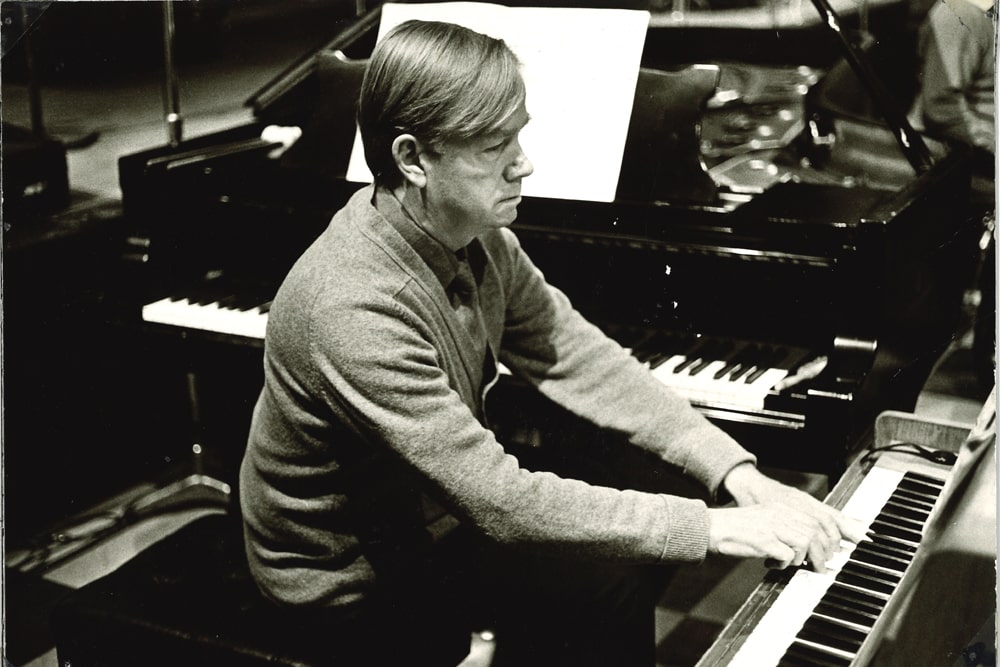
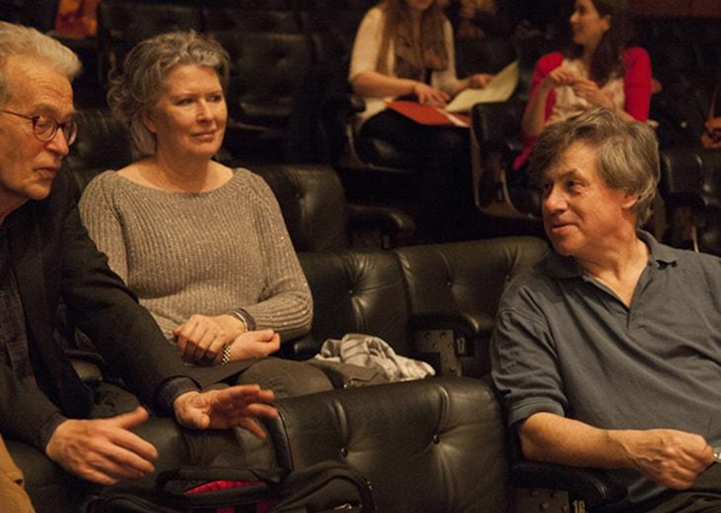
All at the London Sinfonietta are very saddened to hear of the death of John Constable. He was one of the founding members of the London Sinfonietta and then remained our Principal Piano player for the next 50 years. He was fundamentally important in helping build trust and relationships with the wide range of post-war composers whose works helped establish the ensemble’s international reputation in the later decades of the 20th century. He continued to be a musical champion of composers into the 21st through his commitment to realise their works in the best possible way. He was an extraordinary musician and a remarkable man, remaining one of the Ensemble’s most progressive thinkers throughout his career with us. In many ways he represented the best spirit of the London Sinfonietta and rightly became an iconic figure in his latter performing years with us.
We send our condolences to his family and will cherish memories of him.
Andrew Burke, on behalf of the London Sinfonietta
I worked with John for many years during my time as Managing Director of the London Sinfonietta, and we toured to many countries together. I was so sad to hear of his passing but am blessed with many memories of him. His energy and lively curiosity, for music and for many of the other good things in life, were admirable and left me in the slow lane. Many was the morning when I would surface in some city hotel far from home for a hurried breakfast before rehearsals to find that he had already eaten his at leisure in the best café in the district which also happened to have the best coffee in the city. Museums and art galleries were consumed with similar gusto, often with the lovely Kate. He was fiercely loyal to his colleagues and the ensemble and wasn’t afraid to speak his mind. And his generosity and warmth were disarming. Over the years since I left the ensemble I have been inspired by his never-flagging interest in and enjoyment of the many concerts and opera performances where we happened to coincide. Of course, I’d encountered John’s playing long before I worked with him, owning all the Colin Davis Mozart opera LPs from the olden, golden days, never dreaming I would work with him…… Thank you for your incredible service to music, John. I’m so happy to have been there for some of it.
Cathy Graham, Ex Managing Director for the London Sinfonietta
“What was performed on stage was a gripping, disorienting and often mesmerising encounter with spectral music, delivered with a level of precision and commitment that made the experience feel both otherworldly and strangely intimate.”The Live Review
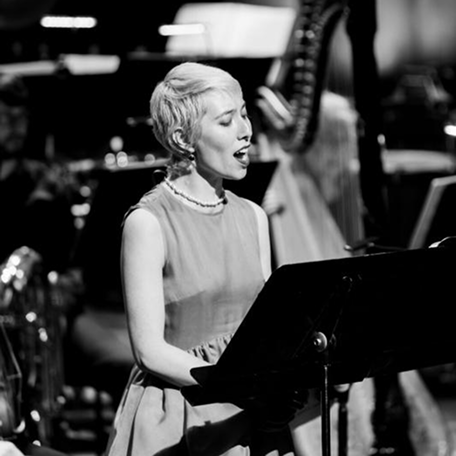
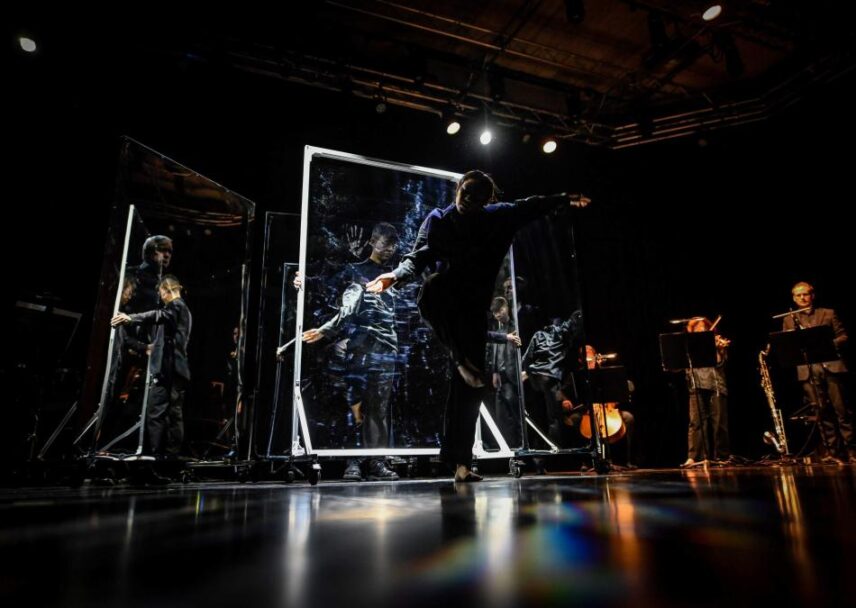
But it was Grisey’s final work that transformed the room into something close to sacred. Under Jack Sheen’s poised direction and through Nina Guo’s luminous and exquisitely controlled performance, the four movements unfolded like shifting strata of civilisation. For over an hour the audience barely breathed — an hour of total concentration broken only by an eruption of applause as the final notes faded, a release equal to the intensity of what had been shared.
An evening of deep listening, transformation, and rare collective focus, this performance reaffirmed the London Sinfonietta’s enduring commitment to creating space for bold, boundary-shifting work.

Queen Elizabeth Hall fell into a rare and extraordinary stillness on Friday evening as the London Sinfonietta returned to one of the most profound works in its history: Gérard Grisey’s Quatre chants pour franchir le seuil. Commissioned by the ensemble and premiered shortly after the composer’s untimely death, the piece remains a defining milestone — a meditation on mortality, transformation, and the fragile edge between sound and silence.
The evening traced a journey through transformation: from the volatile luminosity of Cassandra Miller’s for mira to the spectral stillness of Rebecca Saunders’ stirrings still ii, and the wry, breath-driven ritual of John White’s Drinking and Hooting Machine.
Get Involved!
Do you and your pupils want to be in with a chance of having your pieces performed? We are commissioning you to write new music for us, using our Composition Challenge resources.
But it was Grisey’s final work that transformed the room into something close to sacred. Under Jack Sheen’s poised direction and through Nina Guo’s luminous and exquisitely controlled performance, the four movements unfolded like shifting strata of civilisation. For over an hour the audience barely breathed — an hour of total concentration broken only by an eruption of applause as the final notes faded, a release equal to the intensity of what had been shared.
Get Involved!
Do you and your pupils want to be in with a chance of having your pieces performed? We are commissioning you to write new music for us, using our Composition Challenge resources.
But it was Grisey’s final work that transformed the room into something close to sacred. Under Jack Sheen’s poised direction and through Nina Guo’s luminous and exquisitely controlled performance, the four movements unfolded like shifting strata of civilisation. For over an hour the audience barely breathed — an hour of total concentration broken only by an eruption of applause as the final notes faded, a release equal to the intensity of what had been shared.
Explore more
“The space is astounding – a soaring cathedral nave deep inside the womb of a decommissioned printworks.”